Tracing Carbon







Overview
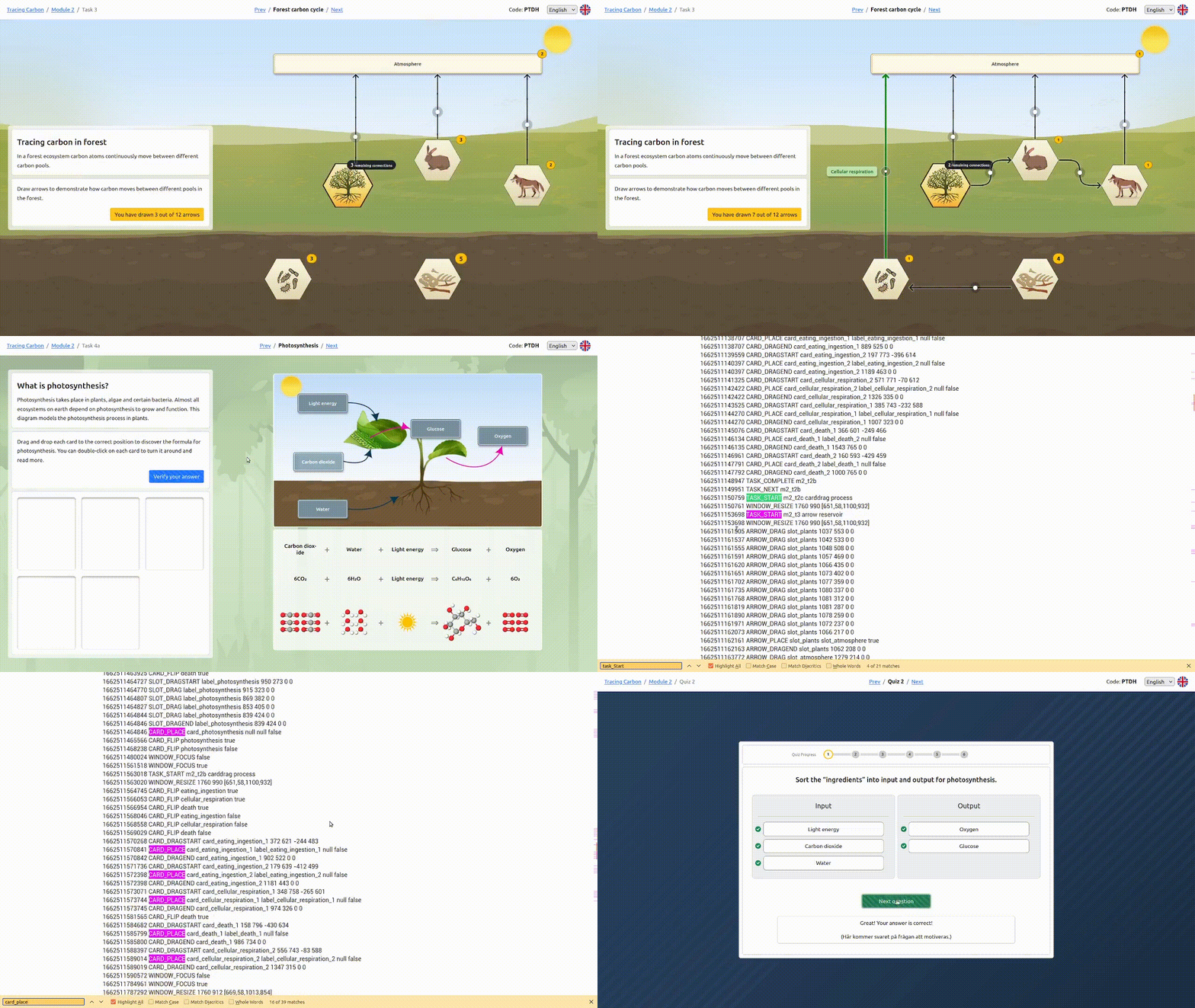
Tracing Carbon is a research-driven interactive learning platform designed to teach students about the complexities of the carbon cycle. Developed through an iterative design-based approach, the tool aims to foster systems thinking—the ability to understand how different components of a complex environment influence one another.
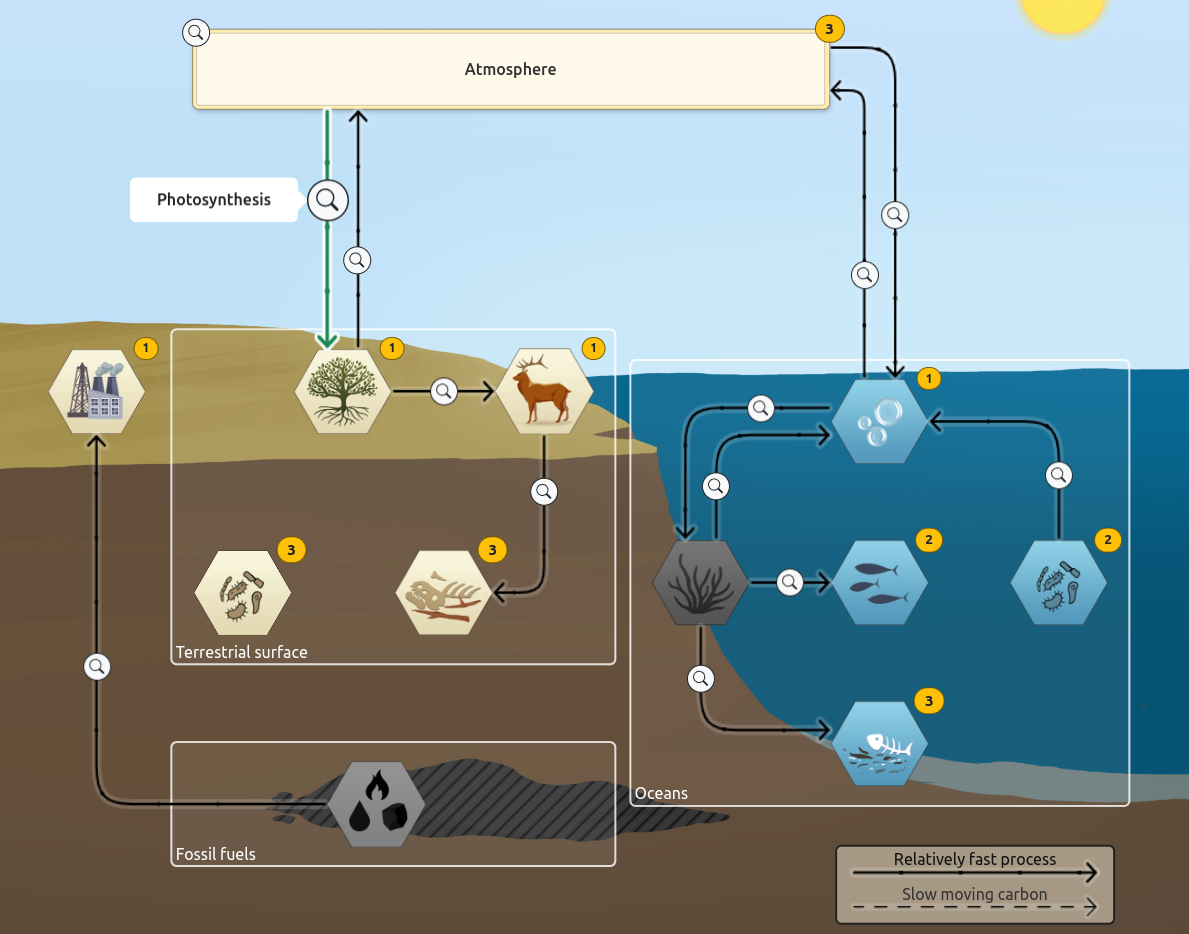
Traditional educational methods often rely on 2D static images that struggle to convey the dynamic, multi-scale nature of Earth systems. Tracing Carbon bridges this gap by providing an interactive digital environment where students can explore the movement of carbon at various levels:
- Organismal Level: How carbon cycles within individual living things.
- Reservoir Level: The movement of carbon between the atmosphere, oceans, and land.
- Human Impact: How anthropogenic activities disrupt natural balances.
Research and Development
The platform was built using a full-stack architecture of Django and Vue.js, focusing on adaptive learning paths. These paths adjust the visualization and content based on individual student progress, supporting a personalized learning experience.
The development process involved:
- Cognitive Learning Principles: Designing the interface to reduce cognitive load while maximizing engagement.
- Co-Design: Teachers and junior high school students were involved in the design process to ensure the tool aligned with classroom needs and educational goals.
- Systems Thinking Theory: Integrating theoretical frameworks to help students recognize patterns and interdependencies in STEM education.
Impact in the Classroom
Tracing Carbon has been deployed in classrooms across Sweden, serving as a primary tool for research into how students interact with complex data visualizations. By blending education, design, and technology, the project demonstrates how interactive media can transform "invisible" scientific processes into tangible, meaningful learning experiences.